This morning, a machine we can no longer control drew a punk we did not choose and put it up for auction. It will do this every day for the next 27 years. Nobody can stop it, including us. That was the entire point of building it.
This article is the long version of why.
The why
Every artist works against time. Stone weathers, canvas rots, servers shut down. The last of those has been doing most of the killing lately: the platforms that hosted a generation of digital art have been closing one after another, and when they close, the work goes dark with them. The token survives in the wallet, pointing at nothing. Ownership without the thing owned.
Ethereum state is the first medium in history that keeps a work exactly as it was made for as long as the chain exists, and the chain is built to exist forever. Not a hash of the work, not a link to the work. The work.
CypherPunks is built entirely inside that fact. All 10,000 punks live in Ethereum state, pixels and renderer both. There is no IPFS, no image server, no metadata endpoint. Ask any Ethereum node for a punk and the contract draws it for you. The total cost of storing the entire collection this way, permanently, was 0.0219 ETH. About forty dollars for forever, which says less about our budget than it does about how little excuse anyone else has.
The name is not decoration. In 1992 the cypherpunks mailing list gathered the people who believed privacy and freedom would be won by shipping code rather than asking permission. Cypherpunks write code. Thirty four years later, our contracts carry a one line description: CypherPunks create art through code. The machine is the argument.
The machine
There are 10,000 punks. 9,800 of them are sold one way and one way only: a daily auction, no reserve, opening from zero, 24 hours on the clock. When today’s auction settles, the contract draws tomorrow’s punk onchain, mints it, and opens its auction. Then it does it again. 9,800 times. The final auction settles in 2053.
No reserve means no opinion. We never chose a mint price, and we will never defend a floor. Every punk opens at zero and finds its own number, discovered in public by whoever shows up, one honest clearing per day for 27 years. Most collections tell the market what the work is worth on day one and spend the rest of their lives arguing with it. This one asks the market fresh, every single day, and accepts the answer. The free market is the only honest appraiser art has ever had, and it prices this collection 9,800 times.
The order of those 9,800 days does not exist anywhere. It is not a hidden list, not a sealed envelope, not a secret we are keeping. Each day’s punk is drawn at the previous settlement using the chain’s own randomness. Nobody knows whether the next punk is ordinary or one of the nine aliens, and nobody can know, because the answer has not been generated yet. Every settlement is a reveal, every day, for 27 years. The suspense is not a marketing campaign. It is structural.
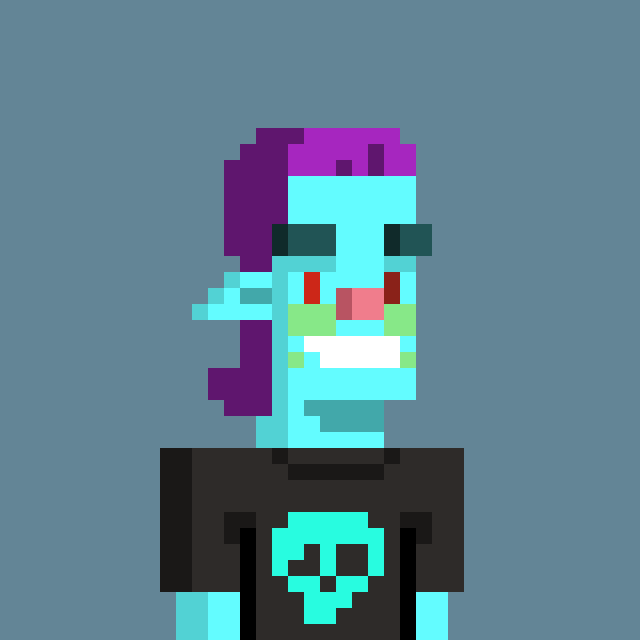
One of the nine Alien CypherPunks.
9 aliens. 9,800 auction days. On average, one drops every three years. The next one is always either years away or tomorrow.
The other 200 punks were drawn blind at genesis by a verifiable random seed: 100 for an artist onboarding allocation, 100 for the team. We did not pick them. We found out what they were when everyone else could have.
The contracts are immutable and have no owner. There is no upgrade path, no fee switch, no admin mint, no way to reach into the machine and tilt it. Zero royalties, forever. What we deployed is what runs, and what runs is public: every line of it is verified onchain, readable by anyone who prefers proof to promises.
The ecosystem
The punks are the heartbeat, but they exist to power something larger: an ecosystem built for artists and for digital art itself, with one rule running through all of it. If it matters, it goes onchain. And one key opens every door in it: holding a CypherPunk.
The publication. HASH’D, the editorial platform you are reading now, covers onchain art and the people making it, and every article is inscribed as calldata. Writing about permanent art on a disappearing medium seemed like a contradiction not worth living with. The archive of this publication will outlive the publication.
The gallery. Every punk is public and browsable now, orbiting at cypherpunks.art/gallery, rendering the same bytes the chain holds, because they are the same bytes. And the gallery is more than the collection’s home. It is the display arm of the marketplace: as artists etch their work onchain, every artist gets their own orbit, their work circling them the way the punks circle now. They should be the center of their own universe. We built the room for it.
The marketplace. ETCH’D is the main deliverable of this ecosystem, and its whole value proposition: a primary sale marketplace where artists etch their work permanently into Ethereum and sell it directly from their own immutable contracts. Zero platform fees, zero platform royalties, forever. Only art that itself lives onchain gets in.
The last few years buried a generation of platforms that held artists’ work, artists’ markets, artists’ careers, and switched them off. ETCH’D is built so that removing ETCH’D changes nothing: the art is in the chain, the contract belongs to the artist alone, the money path never touches us. The permanence we built for our own work, offered to everyone making digital art. It is in the works now, and holding a CypherPunk is the key to the press.
That is what the punks actually are. Not just a collection, a key. The daily auction is the only door into an ecosystem built to support artists for as long as the chain runs, and every punk opens it. Everything is onchain. That is the whole idea.
The manifesto. None of the above is policy, it is philosophy, and the philosophy is written down. The manifesto defines the agreement: the same opportunities for everyone, enforced by code instead of promises. Read it.
Day one
This morning the sequence ran end to end in public. The verifiable random seed landed. The reserved 200 were drawn blind. The machine drew its first public punk, minted it, revealed it, and opened the auction, no reserve, from zero, exactly as the rehearsals promised and exactly as the contracts require. The first settlement will close the loop: the hammer falls, the proceeds split themselves, the next punk gets drawn, and the machine does the only thing it knows how to do, which is continue.
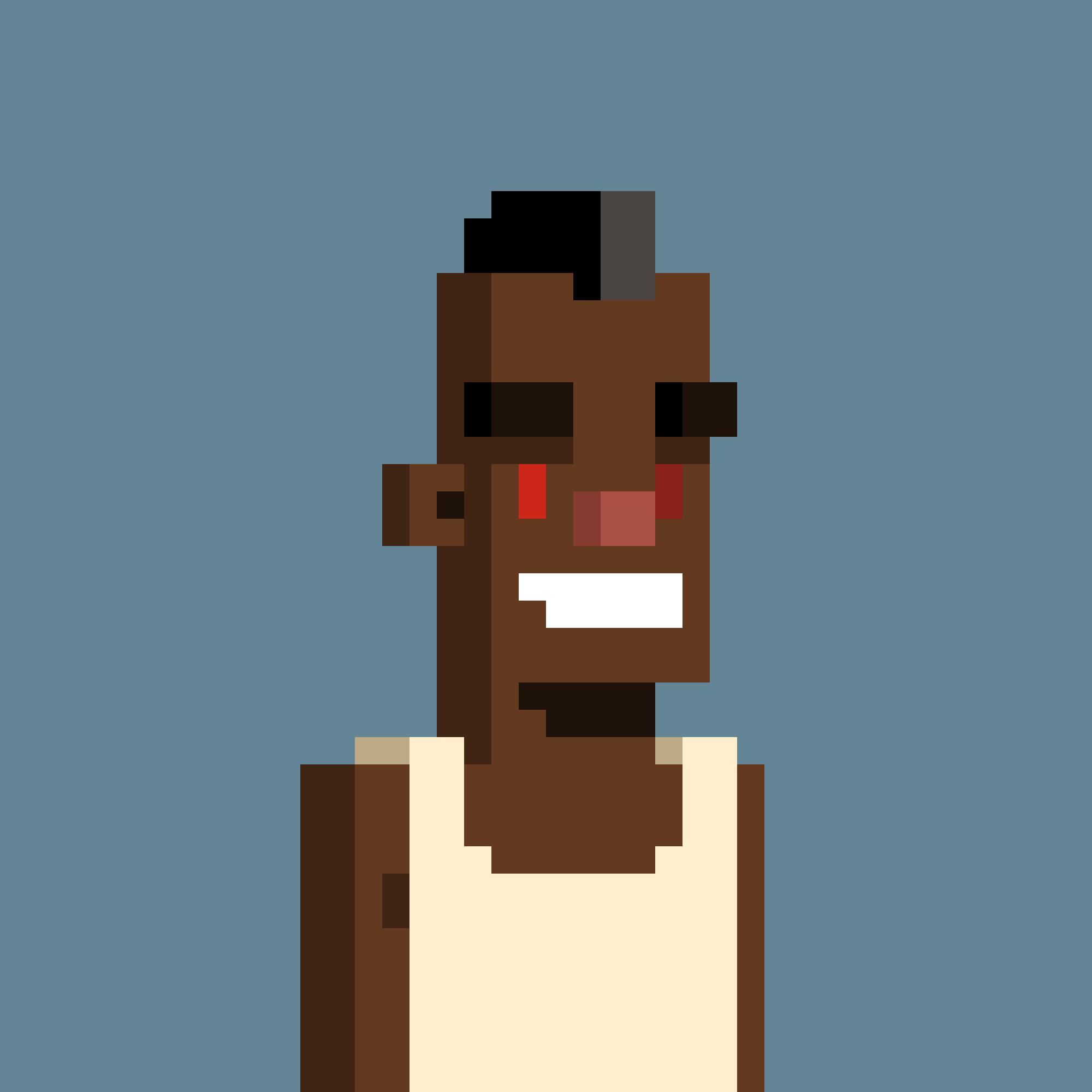
CypherPunk #1 — the first punk the machine drew. At auction now.
We rehearsed this machine for weeks on a test network, ran it through six independent adversarial security reviews, and rebuilt everything the reviews flagged. Then we welded it shut. This morning was the first time it ran where it counts, and it ran the way a clock does: without ceremony, without permission, and without any further need of the people who built it.
It does not need us
Here is the strangest property of what launched today. We are now the audience.
We cannot choose tomorrow’s punk. We cannot pause the mystery, adjust the schedule, or reach into the auction. We hold no privileged position over the machine beyond the same public buttons anyone can press. From this morning onward, our relationship to CypherPunks is the same as yours: we watch the settlement, we see the reveal, we wonder which day the aliens surface, and we wait like everyone else for the one gold cobra hiding somewhere in the next 9,799 days.
Most projects die when their makers lose interest. So we built one that cannot. Not because we plan to lose interest, we plan to be here for all of it, building the ecosystem around the heartbeat, but because a promise that depends on our attention is not a promise, it is a mood. The machine does not have moods. One punk a day until 2053, and the only honest way to make that claim was to build something that keeps the schedule whether or not anyone is watching.
The line is moving now. Day one of 9,800.
Bid on the auction now: cypherpunks.art