maxand98 has spent this cycle building collector institutions rather than just holding — the AB[500] around the first 500 Art Blocks projects, and a founding seat in The Doomed DAO around XCOPY. A conversation about manifestos, curation as authorship, and why the collector's side of the story so rarely gets told.
Back in 2021 you put out an 11-point manifesto trying to pin down what digital art actually is — animated, reflexive, generative, composable, colours that can't exist IRL. Four years on, what's held up, what would you change, and what's missing that you'd add today?
I have come across this idea a few times lately that much communication is just people talking to themselves. Trying to explain or work out ideas either through writing or speech.1
That's what I was doing and I wanted to pin it (even though it is cringe when I look at it) because it holds me accountable to the ideas.
But also to time.2 I know it can be easily gamed / is not Sybil resistant, but it was good for me to articulate those ideas with a timestamp in the way X/Twitter has always allowed and made prominent.
What is interesting as a sign of confidence in the epoch-shifting moment that crypto-art represents is that I haven't been compelled3 to write a v0.2.
So I think much of it holds up, even if some of it could be refined. For example, reflexivity (the observer and the act of observation influencing the work) would be emphasized more, or defined more explicitly — that the artist/collector relationship is close to 50/50 in a blockchain context.
I defined the role of AI a year before ChatGPT's release but I can't recall and did not record the reasoning. Maybe it was obvious to everyone, or maybe that was just a lucky guess.
But I think what I missed and what needs adding is the role of agents4, and I perhaps should have accounted for that now that Kurzweil has been proven correct. As a downstream effect I think you have to then have an opinion on whether humans pivot more (even if only temporarily before humanoids arrive) to the indubitably physical/IRL world5.
Lastly, I haven't seen much discourse even from writers I really respect in crypto-art about what their thoughts are. If you look at art history, manifestos have been quite common — and other than Artnome, I'm not sure there are any other attempts? One of the benefits of writing in that manner is that more intelligent people interject and prove you wrong, or articulate better ideas, and that would make me happy.
You and Benji built AB[500] around the full first 500 Art Blocks projects, and you've framed it as a real cultural moment — the generative equivalent of New York/New Wave in '81. I want to hear you actually argue it. Why does the early Art Blocks era belong next to shows like that?
DAOs I think are in their trough-of-disillusionment moment, but I am enthusiastic.
It was seedphrase who gave me the idea after the AB[500] announcement came out. Though I missed Bitcoin6 I got Ethereum, I got NFTs, I got CryptoPunks — and I am confident about the significance of Art Blocks, and specifically about the AB[500], because that is the boundary around what had previously been undefined.
The AB[500] DAO is a very early work in progress, and Benji and I are still negotiating what it becomes.
Though I started early, I still have not finished acquiring the full 500 set (488/500 at the time of writing), though the remaining works are easier to come by than Portal (edition of 10, with 9 extant) so I am confident of finalising soon. Another collector, Trying, beat me to completing the first of the nine possible 500 sets (Snowfro also has a complete set).
If I need to argue the significance then I definitely need to re-work the essay on ab500.xyz7.
Part of it is that I am obsessed with Diego Cortez.8 The other part of the argument, in essence, might be: 'Show me any other exhibition since that time that proves me wrong.'9
In 1981 Cortez delineated an art movement in real time, drawing a boundary around the downtown art scene to help define it. Hirst did the same in 1988 for the YBAs.
Art Blocks, and specifically the AB[500], marks the first time the artist does not make the object, but instead describes the constraints using an algorithm and the work is generated at minting by the collector. The collector minting process is the final brushstroke for the work. This is a new aesthetic innovation. The first 500 series define these early explorations of this medium, and in future will be what that medium is measured against.

There is no doubt some varied quality in the series, but what is amazing to me is how many foundational and subsequently iconic generative artists were included. Even now, after many hours of research and appreciation, I feel I have only scratched the surface of the depth of many of these series.
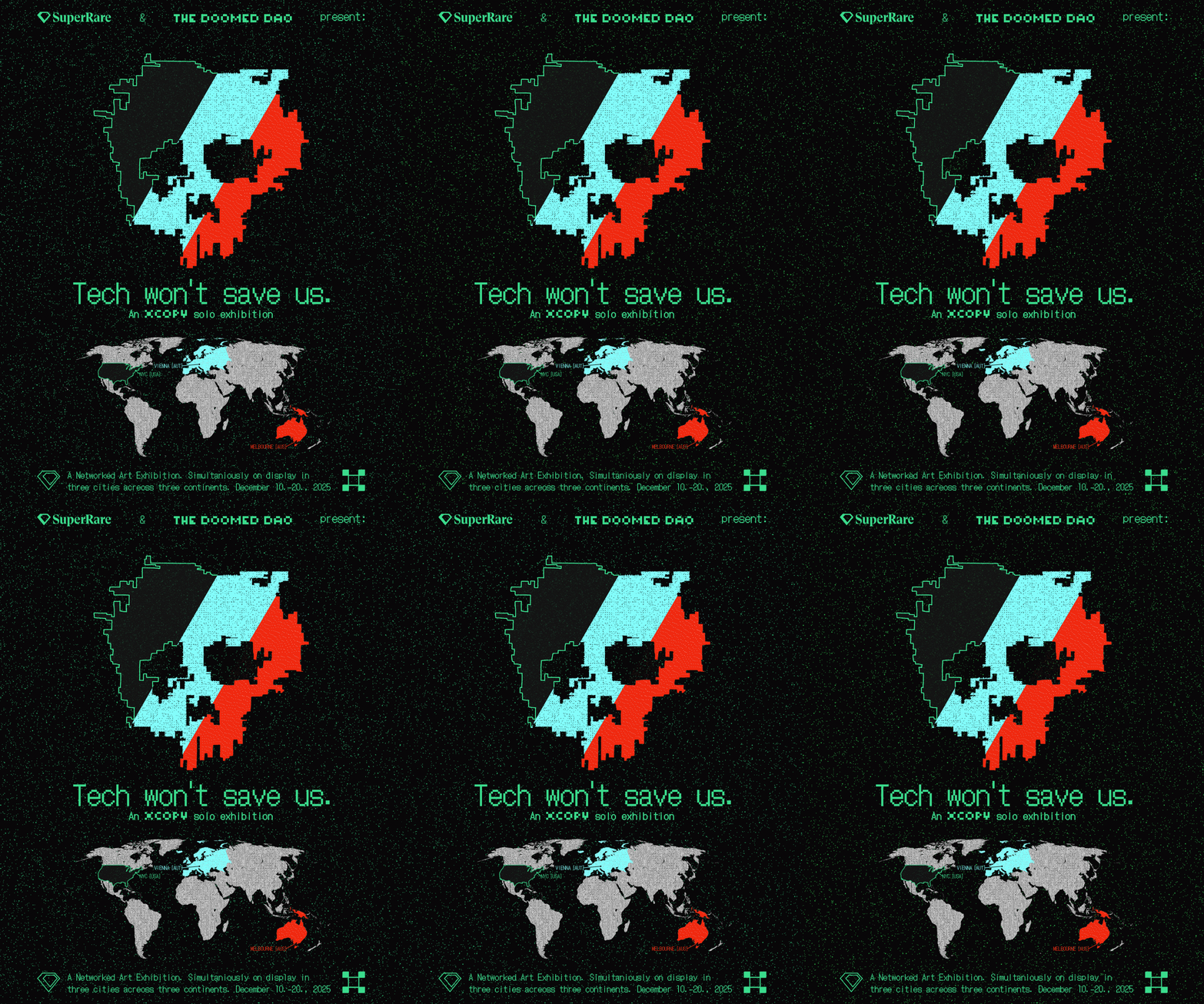
The Doomed DAO went from nine XCOPY collectors in 2023 to over 150, and last year the group curated and put on an actual XCOPY show with SuperRare, Tech Won't Save Us. That's collectors becoming curators. What did being part of that teach you about what a collector community can really be?
There are 165 current members, and the XCOPY exhibition was simultaneously held in three cities (Melbourne, Vienna, and New York).10
I think it's incredibly difficult to articulate and define what doing something like that provides. I definitely believe in the principle that learning is in the doing. The best way to become an expert is to say you are, etc.
You can point to small things — for example, the principle that when displaying XCOPY work, one pixel of the artwork must correspond to one LED light in the display that you are rendering the work on.11 There is just no way to know that unless you physically do the thing.
One decision Jediwolf made from the start, and credit to him for this (because I've argued the other position at times), is that the Collector Group itself has been curated. What that leaves you with is just very pure signal in the discussions that happen within that forum. I am extremely bullish on this type of collecting style, and in aggregate, the collective expertise vastly outnumbers what each of us could do individually.
Between AB[500] and The Doomed DAO you've helped build two collector institutions — one around the start of Art Blocks, one around XCOPY, both invite-only, both about looking after the work rather than just owning it. What pulls you toward building these things, and what's each one really trying to protect?
AB[500] is embryonic, and I'm still working through some decisions about how it will manifest. I think this particular collection deserves its own token that is generative, time-based, and responds to the collections within the collector's collections themselves. I have some concepts and am trying to nail that design before I open it up such that the curation of members is more automated. Rhynotic and Tokenworks have been influential in thinking about this.
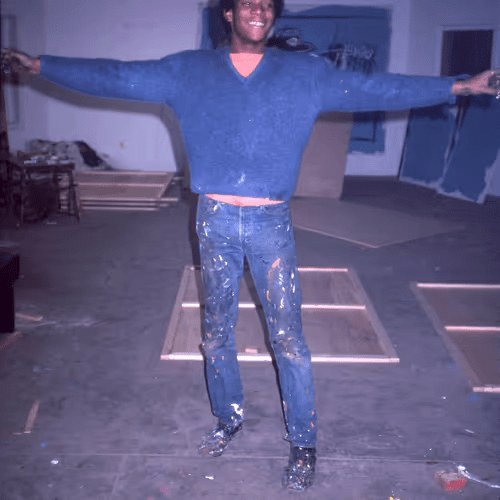
The main answer is again a nod to art history, because I think very few artists ever rise to fame or influence without very specific curatorial activity. You can look at Annina Nosei and Basquiat, for example. Although he was quite the hustler, he needed the help of Nosei to move forward, and I think that applies to XCOPY, Art Blocks, or any other artist.
XCOPY is extremely underrated in how he has approached his collector community, and I think XCOPY is a generational artist — not just for his artwork but because of his approach to this side also. He's just a very sophisticated artist on many levels.
I don't know this to be true, but my sense is that Snowfro is too humble to care as much about this side of things, and because I think generative art is currently less accessible to non-crypto-native folks, there does need to be more specific curation here. To me, that intellectual task, in the style of one of my main literary heroes, Robert Hughes, is a very interesting challenge to tackle.
You've spent a lot of time deep in XCOPY's work. Is there a bigger project in that for you — something book length maybe? And what is it about XCOPY that holds up to that much attention?
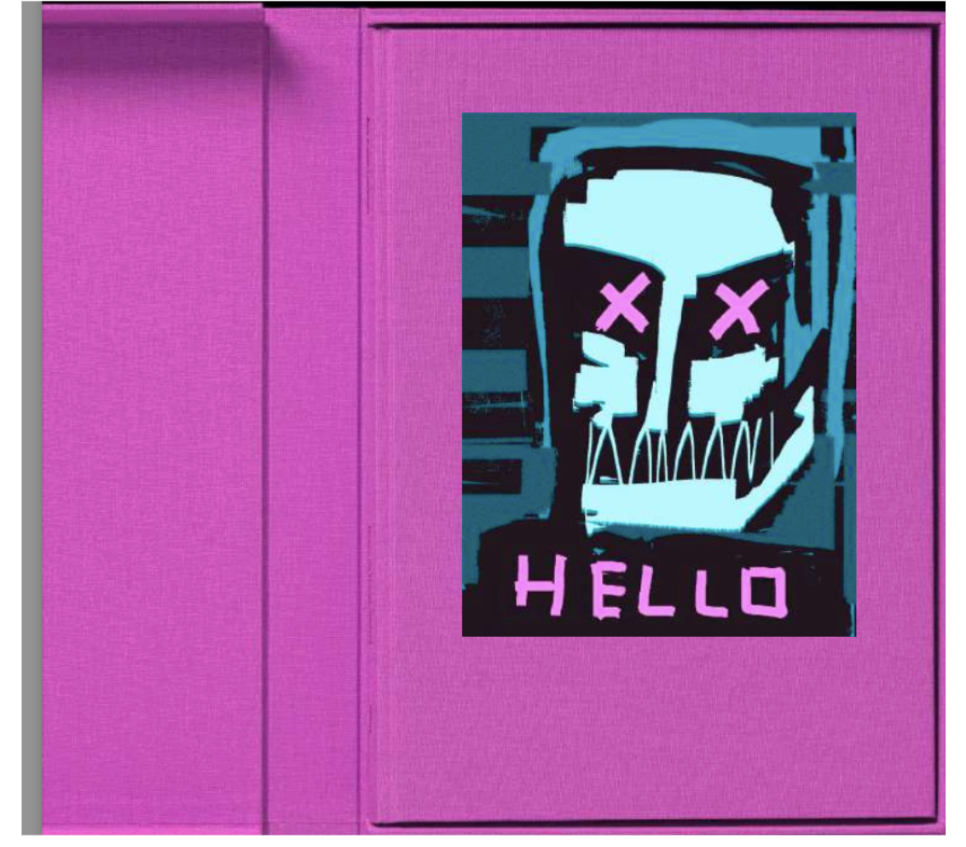
I've had a tab open on my browser now for more than two years writing a reference work on XCOPY's KnownOrigin editions. I'm hoping to finalize in the next few weeks. I paused because I was wrestling over the need for — and the irony and/or impact of — physical objects, and specifically Taschen- or Phaidon-style art books on moving-image-based digital art. I have flipped back into the camp that these physical entry points are extremely important for crypto-art, and so I have decided to finish that work.
You said something that stuck with me — that collecting itself becomes an art form, just a different kind. Putting together a full AB[500] set or stewarding a body of XCOPY work is a statement, not just buying. When you collect, what are you actually making?
I really think this is one of the major untapped aspects of blockchain and crypto-art that is yet to mature, and that is the skill of collecting and curation. One metaphor might be that the artworks are the notes, and the collector can use them to create music.
If you are ever doubtful about crypto-art, you can look at and celebrate the people that have just spent multiple years of time, capital, and effort putting together some of these collections that are more than the sum of their parts. I don't think the display mechanisms have been nailed down yet, and, for example, on-cyber galleries are not the final form for this activity.
Another problem is that sites like Gallery.so, DECA, and others have just not been able to maintain any kind of business model or PMF, but I think this will change and iterate over time. It's one direction OpenSea or SuperRare could have embraced, and I think sites like yours do fill that gap, and I am excited about that prospect.
You can look, for example, at someone like Deeze, who has a phenomenal crypto-art collection which is very well put together. Spending time scrolling through it is just an easy way to see the power of sophisticated collecting. His personality comes through in the way the collection is assembled.
Almost no one writes about why collectors collect. You pointed out Kate Vass has done a few, but that's about it. Why do you think the collector side never gets told, and what gets lost when the only story around a piece is the artist's?
I think it has been told many times in art history.12 I think it just takes longer to resolve. By definition, the artwork has to be created first, and then the collecting comes after and has to be refined and matured. We're just not there temporally at the moment.
You can already identify the names that will be talked about. Jediwolf with overeXposed and under the Gan; clearly Benji with Pella, VonMises, and lots of others.
Like the metaphorical tree in the forest, there is no sound from art unless there is collecting and curating on the other side to hear that sound.
The chain kills the distance between collector and artist that the gallery world always kept in place. Working this close to XCOPY's work, has that changed how you collect — and is there a risk in being too close, where backing the person and judging the work start to blur?
There is perhaps a category error here. Blockchain-based disintermediation is a society-changing development, but disintermediation and critical distance are not the same. I think the problem is that the cultural systems need time to react and adapt, and this is still evolving.13
I am not a neutral party on XCOPY. I hold the work, I'm a founding member of a collector group, and I've spent two years writing a reference book on the KnownOrigin editions. Being close to the work has definitely changed my collecting, mainly by appreciating more of the layers that XCOPY has, which is a characteristic of any great art: there are multitudes within. It was embarrassingly late that I realised the 'ICXN' series is actually read as 'ICON', with elements of Byzantine iconography, and that it fits into a broader context within Art Blocks, for example.14
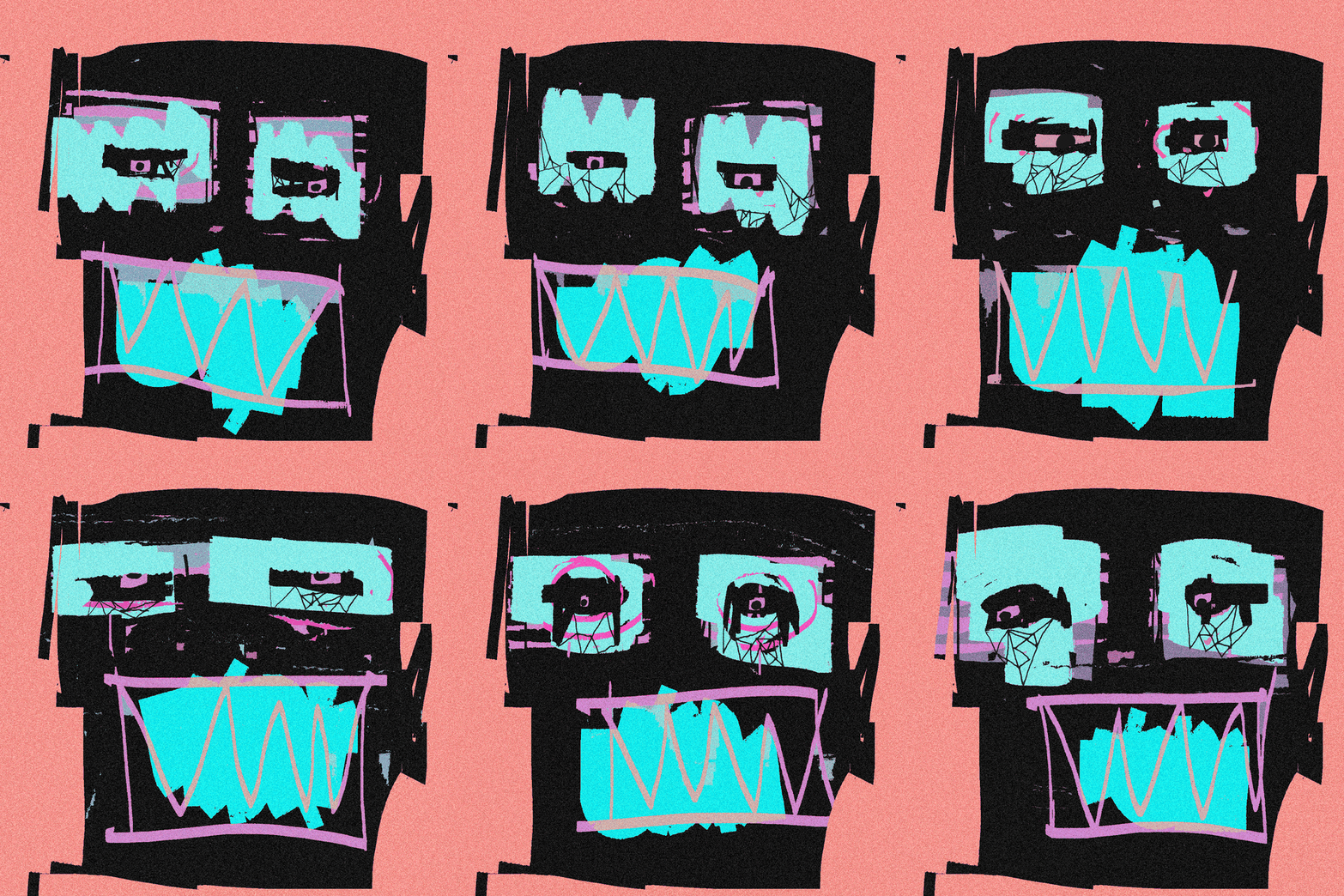
You hold Punk 5264, one of the works that basically started this whole space. PFPs are a strange thing when you think about it — people wear a piece of art as their face online, their identity becomes tied to it. What do you make of the PFP as a format? Why do you think putting on a Punk, or any piece, as who you are online became such a powerful thing in this culture?
I once had 23 punks, and now I have two, but I don't use them as PFPs. I think it's normal and fairly predictable — just a cultural embellishment of a certain era where PFPs were even created as a thing by social media platforms. I don't use any kind of PFP and have always used Yves Klein Blue, because I am strongly drawn to colorism and the notion that a human invented a color was a revelation to me at the time. These are just shortcuts to some kind of imagined identity.15

I think avatars, costuming, anonymity, and privacy are just very interesting areas to contemplate, mainly in what you believe will be the future states. Punks have reached that stratosphere where there is no world in which they are not considered important.
For someone walking into digital art right now — overwhelmed, no idea where to start — what advice would you give them?
I think the principle of learning by doing is the most important. There is no wrong pathway other than some effort and time spent learning and implementing proper security practices — just go for it. There is nothing worse than seeing someone get drained.
I personally have some preferences, like buying on secondary rather than minting primarily and buying on the open market where possible, but these preferences are all personal and about your own collecting style. In practical terms, spending time with other significant collections and getting an understanding — and even reaching out to those collectors to talk about the art — is a good start. Or join a DAO!
Footnotes
- I'm not going to get too Tony Robbins here* but there are likely neuronal pathways for this. ↩
- It's a durable surprise that there has been virtually no movement or development in blockchain writing or film, or many other media, in the way NFTs / dynamic visual art have embraced blockchain.** ↩
- I'm taking retatrutide, which means I don't drink nearly as much beer, and that could also be the reason.*** ↩
- I have gone back and forth on references and footnotes as a writing style, but if you consider the main writing audience is agentic, it can be parsed easily and summarised by the agent anyway, so it's not as important these days whether humans can read this or not. ↩
- As a consequence there will probably then be a counter-reformation of the metaverse. ↩
- To be fair to me I was working in my day job like a nutter at the time. Talk about generational opportunity cost. ↩
- I may have lost the admin login to the site (temporarily). ↩
- AFAIK there are no good documentaries about him, but there is this great obit: brooklynrail.org. ↩
- On Hirst's Freeze (1988): artforum.com. ↩
- Very underrated collection: Tech Won't Save Us — exhibition promo. ↩
- To be a purist here, this doesn't apply to some on-chain work like ICXN. ↩
- 'Peggy Guggenheim: Art Addict' is a great example. youtube.com. ↩
- You have to have a position on whether technology leads culture or the other way around. The way I frame it in my mind is that technology sets the constraint space first. Culture then chooses pathways within that space. We are still watching those pathways map out. See McLuhan: the medium is the message. ↩
- I would love to know why 'ICXN' was not included in the AB[500]. My best guess is that his name is so huge and dominant, it would cause the whole 500 to be lopsided? ↩
- You need to be able to understand why, late in life, Nietzsche went to aphorism. I think this is the answer to the need for PFPs as a non-linguistic shorthand.**** ↩
* This was very Tony Robbins. At some point I heard him talk about walking into a room in an expansive body-language pose and — guess what — it works.
** I have used mirror.xyz, paragraph, but still amazed that Substack is such a big thing for monetisation.
*** Which is a failed article I drafted about whether Charles Bukowski would be able to write anything in 2026 and beyond.
**** And come to think of it, one that may ultimately be more agent-resistant, at least in the medium term / pure-LLM era.