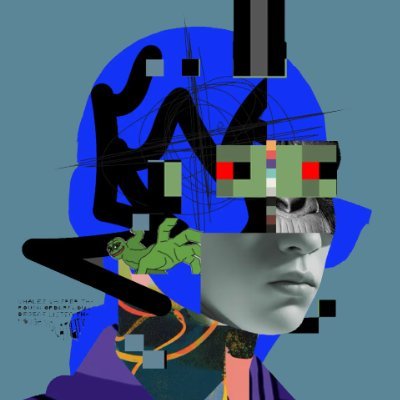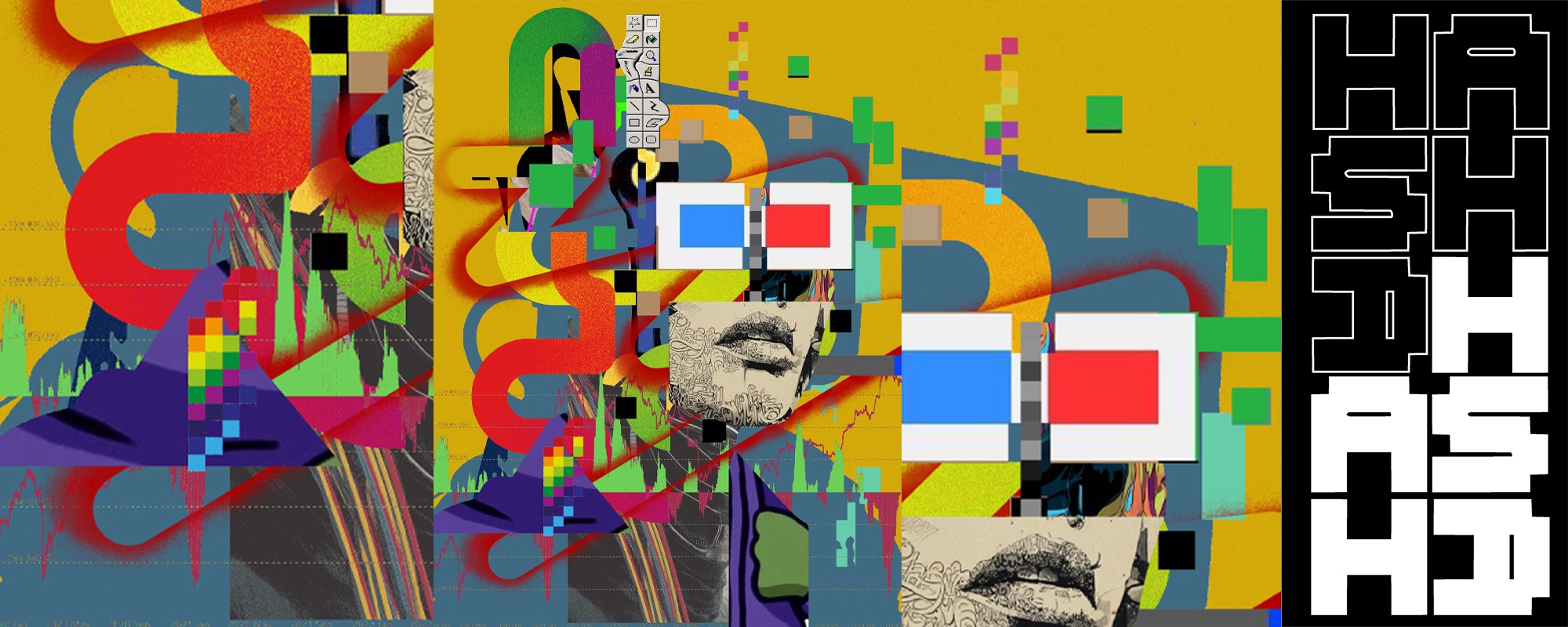
Most projects launch with a roadmap. R3ORDR launched with a manifesto that reads like a refusal.
“R3ORDR is not a traditional PFP collection,” the core document states flatly. “It is not built around promised utility, artificial hype or a roadmap designed to create short term belief.” What Swiss artist Dario De Siena minted instead is something closer to an organism: a generative art protocol built from fragmentation, reconstruction, and evolving signal systems, where the whole point is that it never fully resolves. The 6,942 pieces that make up the collection are not a finished set so much as a snapshot of a structure still in motion. In a system that, by its own admission, never fully stabilizes, nothing is ever final.
That tension is the work. The website states the mission in three words: reordering the signal.
The protocol, not the product
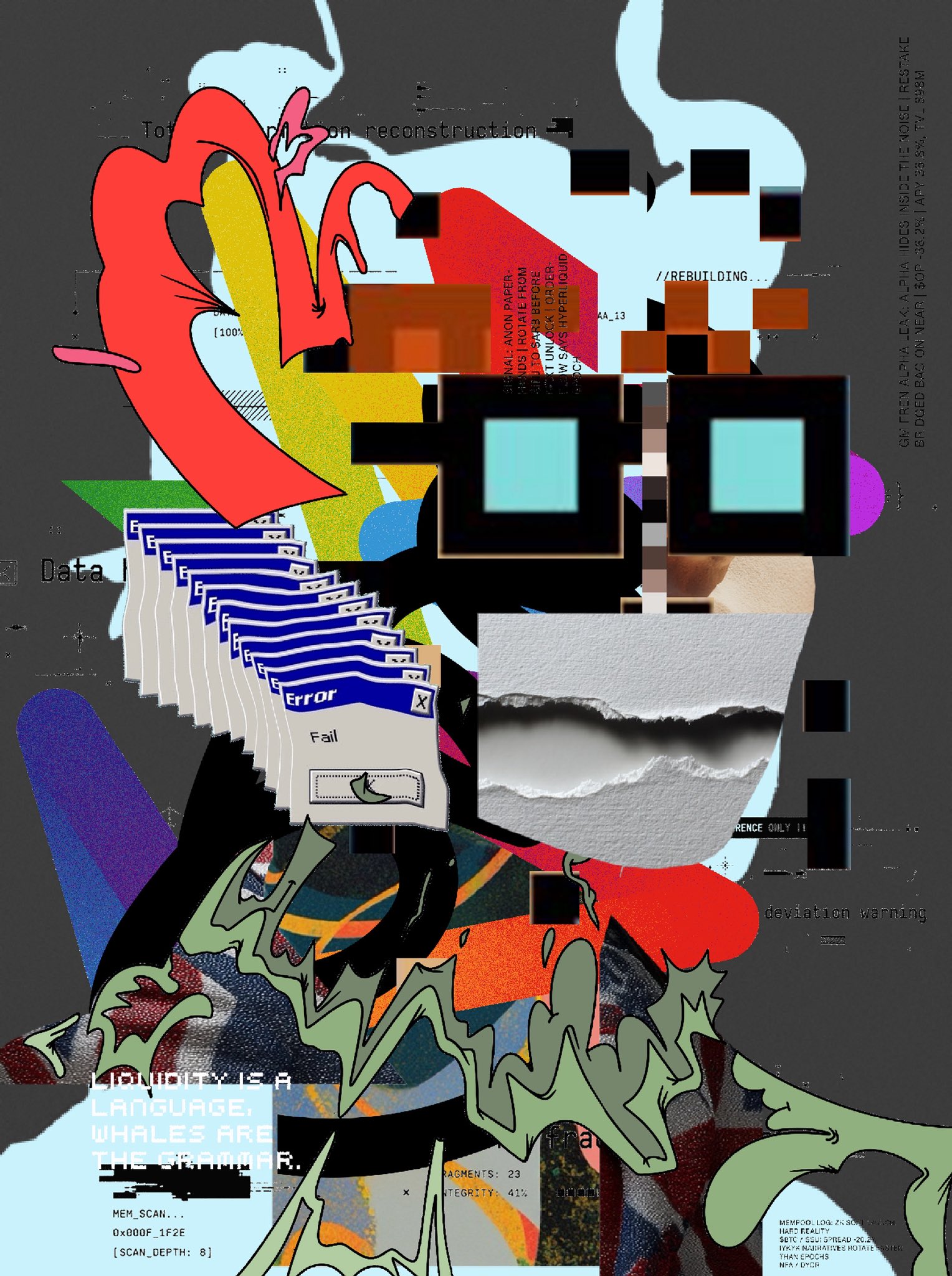
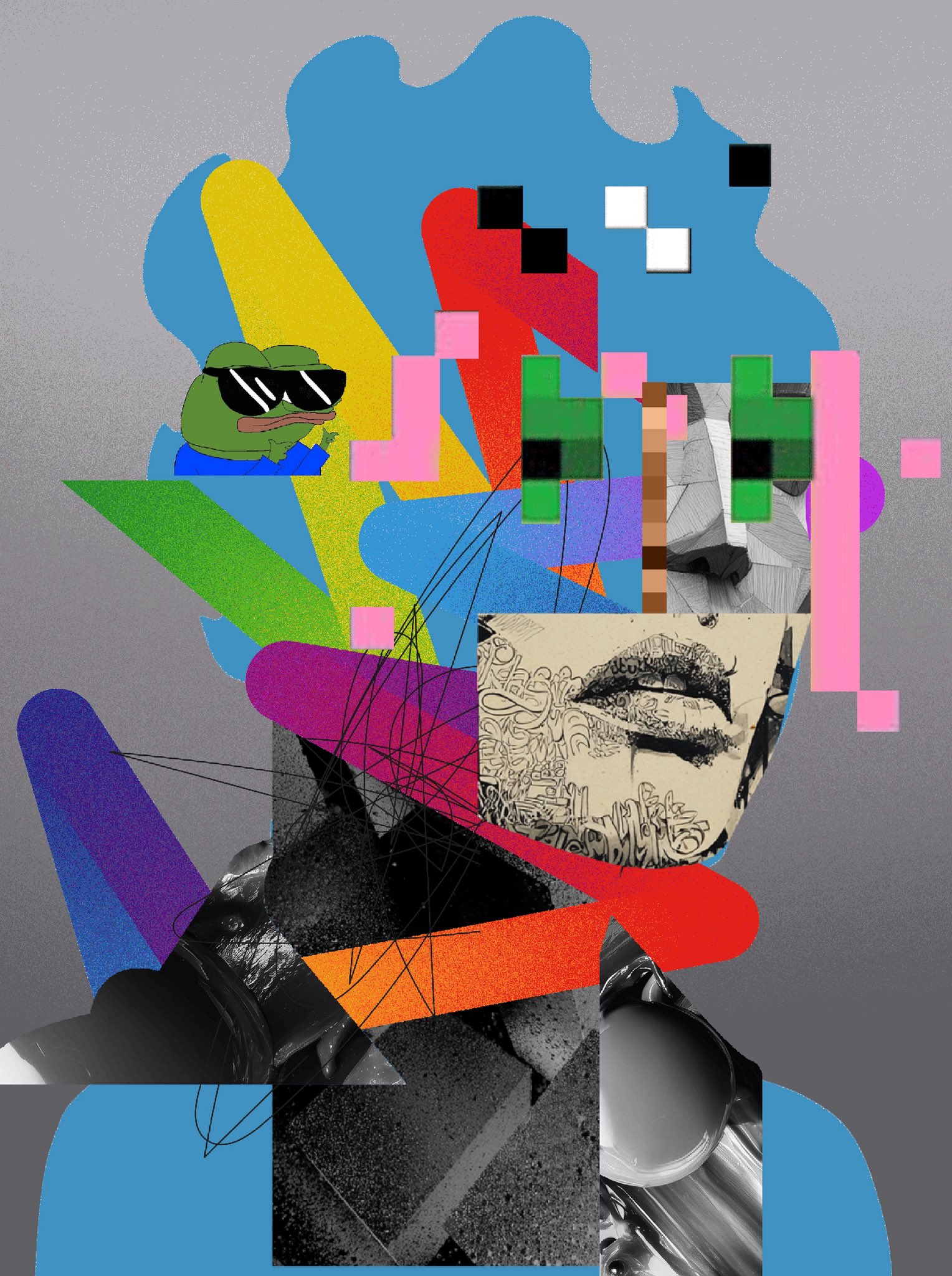
De Siena frames R3ORDR as a visual response to a time shaped by acceleration, uncertainty, and fragmentation. The document describes a space that never stands still, where narratives rise and disappear, systems promise control and then collapse, and attention moves faster than meaning. The entities that populate the protocol are reconstructed fragments of identity, culture, memory, and signal, carrying traces of collapse, pressure, digital erosion, and reorientation. Some feel stable. Others feel unstable, unfinished, or caught between transformation and corruption. The visual language is distortion and symbolic reconstruction, fragments pulled apart and reassembled into something that feels alive precisely because it looks like it might fall apart again.
The radical move is structural. Rather than running on a roadmap, R3ORDR operates as an open protocol formed through participation, creativity, and collective energy. As the manifesto puts it, the work is a language forming through repetition, attention, alignment, and shared recognition.
The signal is the mechanic
Here is where R3ORDR separates itself from the usual community talk, because it has actually built the tools to back the claim.
Through the project site, holders are handed a set of ready-made AI prompts under a simple instruction: copy, paste, reorder. Each one takes a holder’s own R3ORDR artwork and reconstructs it into a new environment, a luxury gallery editorial that treats the piece as a museum-grade artifact, a wheatpasted street poster peeling off a wet brick wall in a neon alley, a dimensional installation where the artwork physically erupts from its frame inside a fractured post-internet archive. The instruction throughout is telling: preserve the original artwork exactly, do not clean up the imperfections, then explode everything around it outward. Reconstruction without erasure, which is the entire R3ORDR thesis compressed into a prompt.
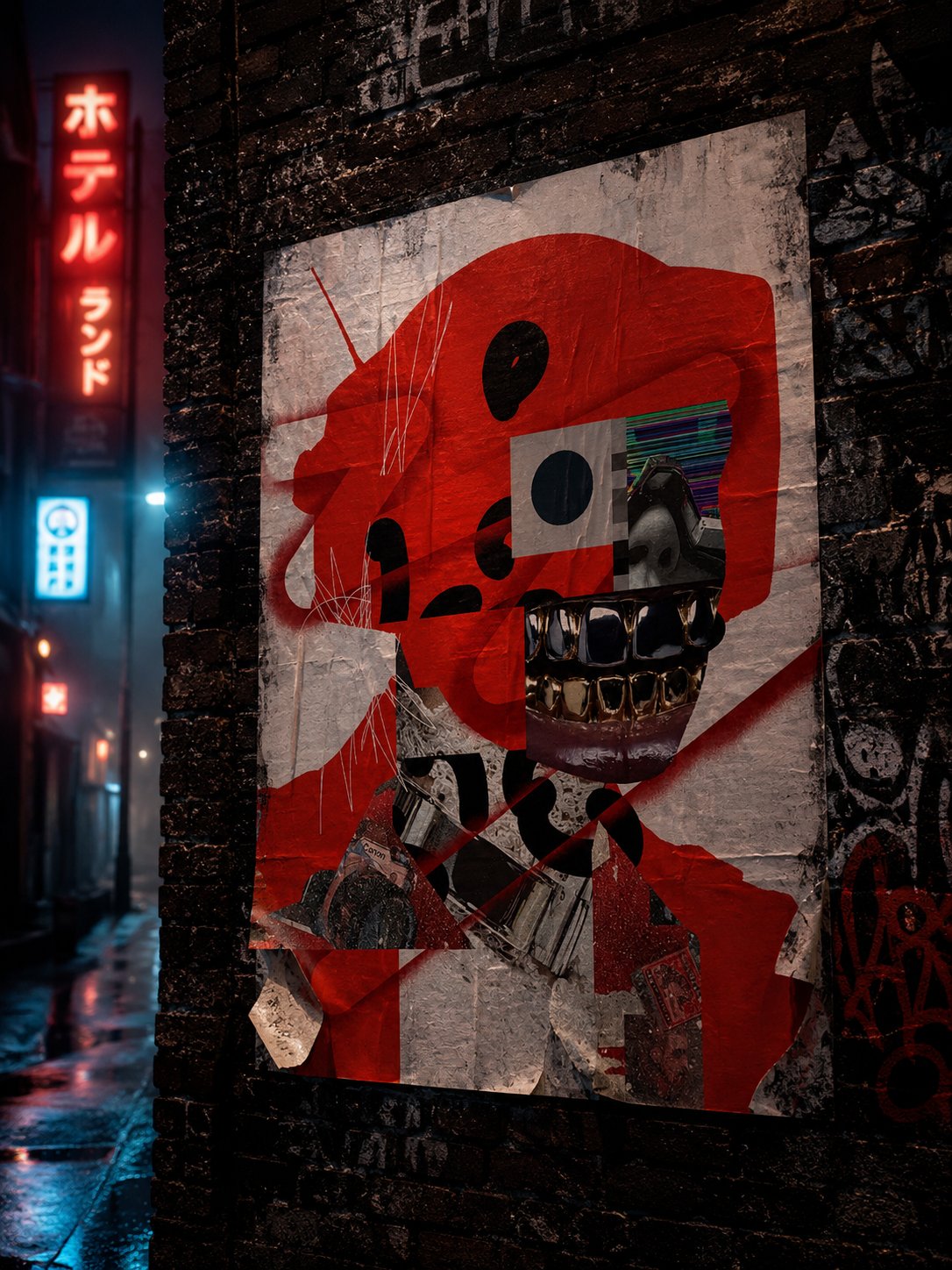
Alongside it sits a growing archive of community signals, memes and protocol visuals made by holders, posted explicitly to be used, remixed, and spread across timelines. Dozens are already live. This is what the manifesto means when it says the community does not simply observe the system, it feeds it. De Siena has built the rare project where the audience is not waiting for the team to deliver value, they are the mechanism by which the work keeps generating itself. The holders are the protocol’s nervous system, and the prompts are the synapses.
In a market trained to ask what a project does, R3ORDR answers with what it is: a living thing that keeps reordering itself.
Disorder as a beginning
The most quietly subversive idea in R3ORDR is its attitude toward chaos. The manifesto describes the work as beginning between chaos and control, between noise and structure, between what breaks and what slowly starts to form again. It calls itself a movement of reorientation, a wave of people who have spent enough time inside the space to understand that disorder is not always the end of something. Sometimes, the document says, it is the moment before a new structure appears.
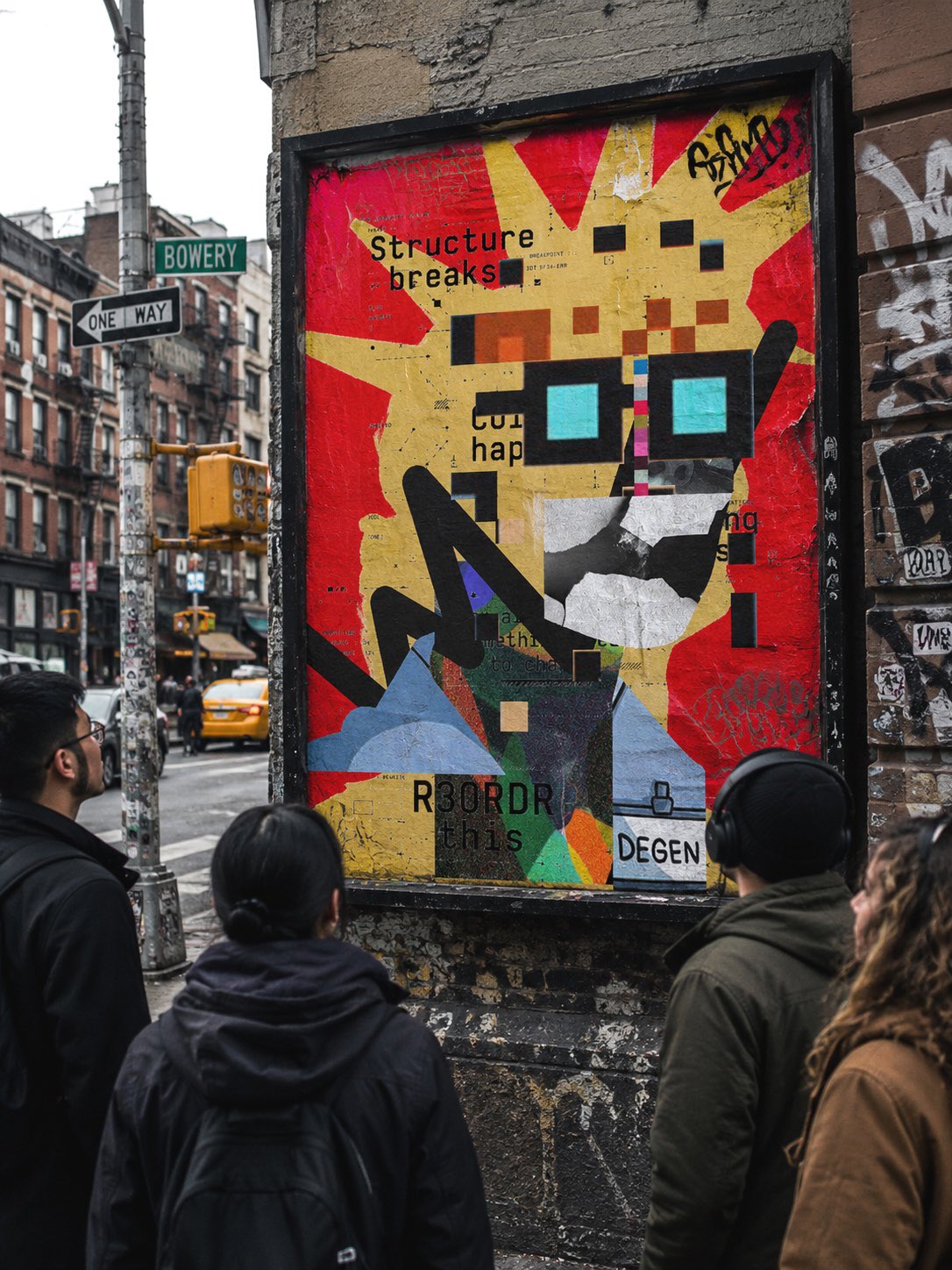
That reframing is the emotional core of the project, and it doubles as a thesis on belonging. R3ORDR is about belonging without pretending everything is clear, about recognizing shared signals in a fragmented world. Artists, collectors, builders, and observers meet inside the same instability, not because they were told what to believe, but because something in the structure feels familiar. It is a notably honest pitch for a community, no false certainty, no manufactured hype, just a shared recognition that the noise might be the beginning of something rather than the end.
Breaking and remaking
None of this comes from nowhere. R3ORDR is the logical endpoint of a career built on taking things apart.
De Siena started in graffiti and street art before moving through expressive portrait painting, abstraction, and conceptual digital worldbuilding, working all the while as a graphic designer shaping visual identities and systems. His whole practice has circled one idea, that imperfection and failure are not flaws to hide but material to build with. He has spoken about integrating perceived failures directly into his work to deepen its authenticity, and his own artist statement describes the throughline plainly: identity, imperfection, and transformation, breaking and remaking.
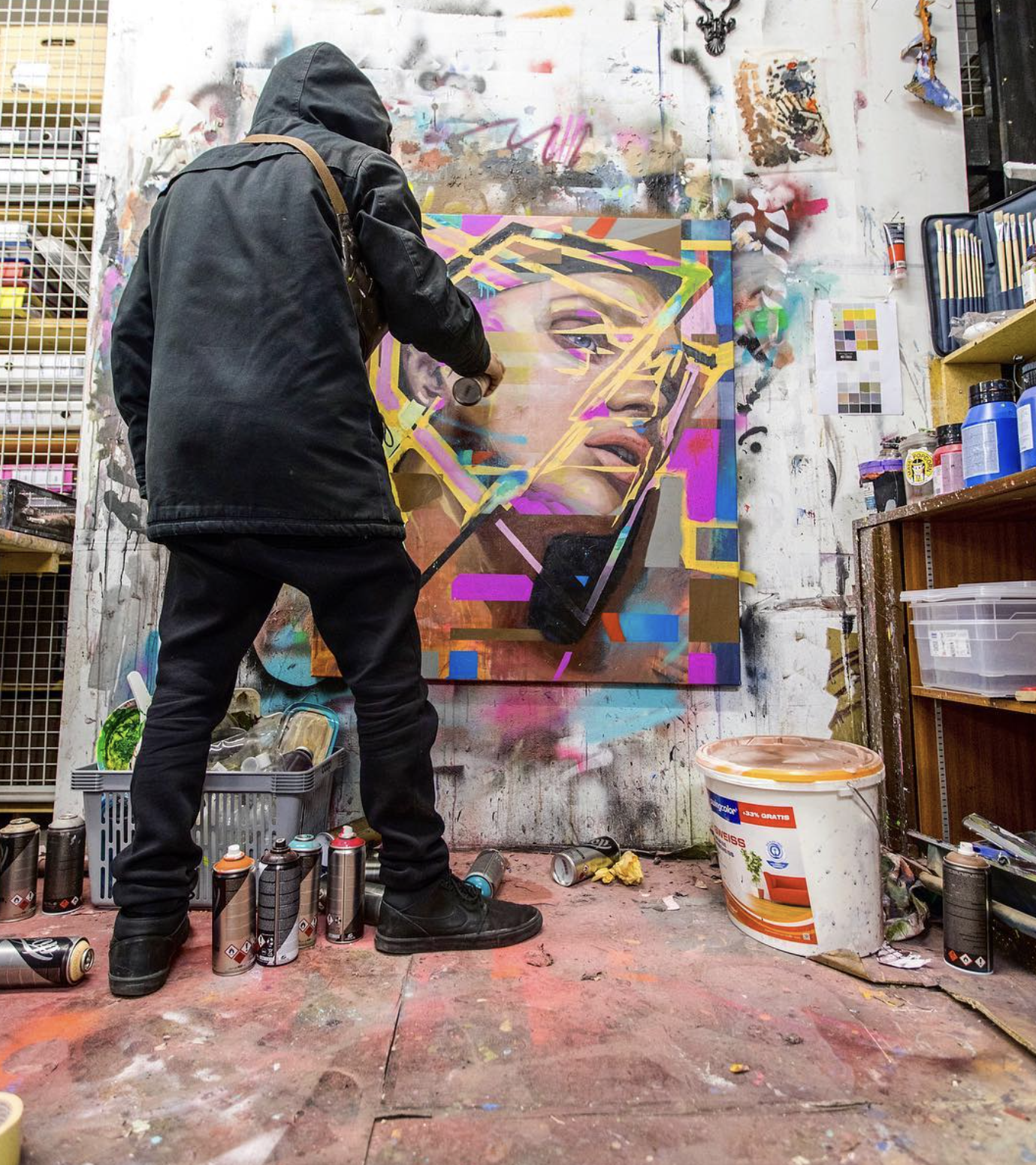
R3ORDR is that philosophy finally given a system to run on. The graffiti writer who painted over his own walls, the painter who let mistakes stay on the canvas, the designer who built identities for a living, all of it collapses into a protocol whose core gesture is fragmentation and reconstruction. He was one of the earlier physical artists to cross into Web3 cleanly, and where many such crossings produce a digital copy of the analog work, R3ORDR does the opposite. It uses the native logic of the chain, generative, modular, participatory, evolving, to make something that could not exist on a wall at all. The prompts make the loop literal: a holder can now take a born-digital R3ORDR entity and paste it back onto a virtual brick wall, closing the circle from street to screen and back again.
The earlier collections were Dario painting with new tools. R3ORDR is Dario building the tool itself, then handing it to the crowd.
The quiet argument
There is a quiet argument buried in R3ORDR about what an art project on chain can be. Not a product with a holder benefit, not a PFP waiting for a utility unlock, but a genuinely open ended system that treats its community as collaborators in an ongoing act of reconstruction. R3ORDR does not promise certainty, the document admits. It reflects the search for direction inside uncertainty. Each piece stands on its own but points toward something larger.
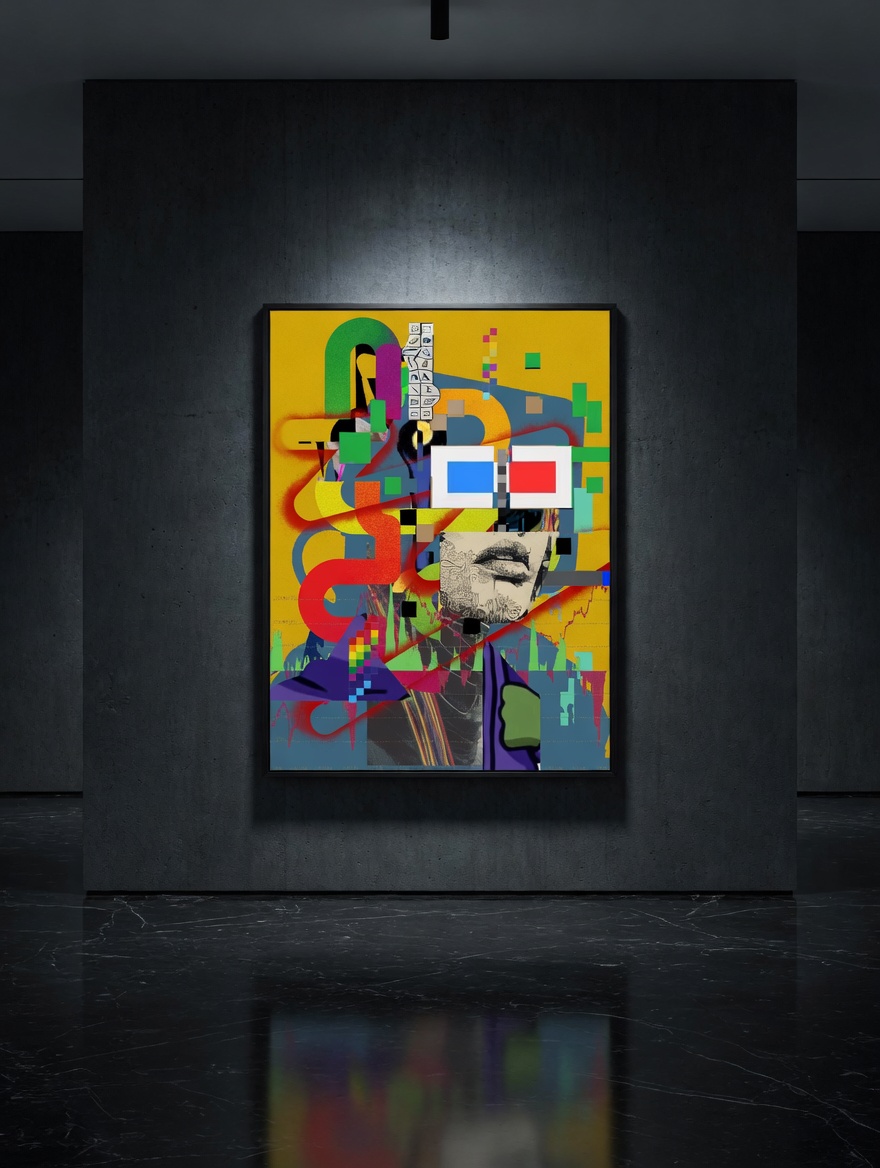
The manifesto closes on three beats that function as the whole project in miniature: the structure remains open, the signals are still moving, the future is R3ORDR. The fragments will keep getting reordered. The system will keep refusing to settle.
That is either a contradiction or the entire point. With De Siena, it is usually both.