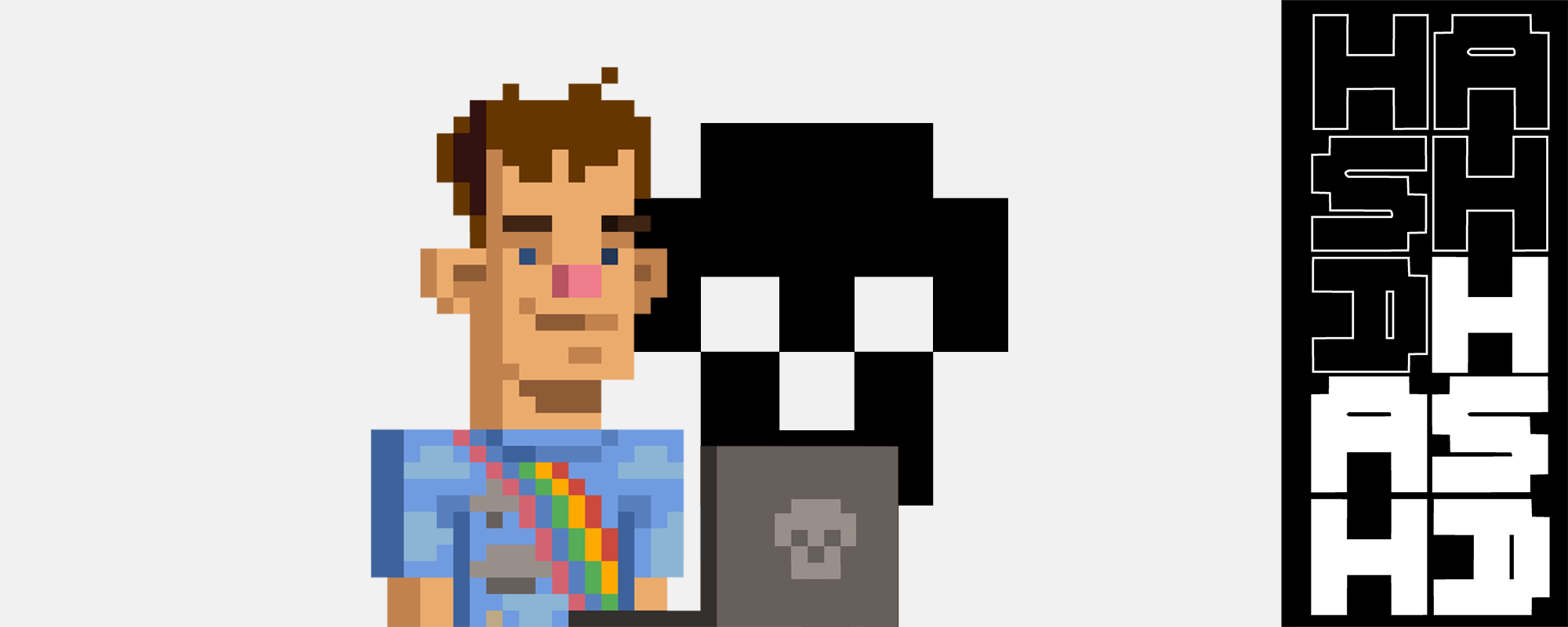
In December 2023, Vitalik Buterin wrote "Make Ethereum Cypherpunk Again," a list of the values he believes the ecosystem was built for and has been drifting from. This is an audit of our project, CypherPunks, against his standard.
When a project shares a philosophy with someone influential, the temptation is to write the flattering version: quote them, claim the values, imply endorsement. That version is worthless, and no tradition would see through it faster than the one whose inheritance is don't trust, verify. So this is not a case for approval. It is a measurement, with the failures left in.
The essay names seven values: open global participation, decentralization, censorship resistance, auditability, credible neutrality, building tools rather than empires, and a cooperative mindset. We take them in his order. His first and third are scored inside the decentralization section, because in this machine they are properties of the same decision.
Decentralization
"continue working even if its core developers disappear forever"
That is his sentence, word for word, and it is the sentence CypherPunks was built around before we ever read his essay.
CypherPunks is a machine that runs one no reserve art auction per day for 27 years, drawing each day's piece onchain at the previous settlement, until the last of 10,000 settles in 2053. The contracts are immutable. They have no owner, no admin key, no upgrade path, no fee switch. One narrow lever survives, and we will not hide it: a guardian pause, held by a multisig, that can stop the next auction from starting. It cannot touch a live auction, cannot stop bidding, cannot block settlement, and releasing it is permissionless after a 48 hour timelock. Settlement is permissionless everywhere: anyone at all can press it, paused or not. We deployed it, verified it, and lost the ability to change it, on purpose.
uint256 public constant UNPAUSE_DELAY = 48 hours;

function pause() external {
    require(msg.sender == pauseGuardian, 'not guardian');
    ...
}

/**
 * @notice Execute a matured unpause. Permissionless — the timelock
 * is the gate, not the caller.
 */
function unpause() external whenPaused {
    require(unpauseScheduledAt != 0, 'unpause not scheduled');
    require(block.timestamp >= unpauseScheduledAt + UNPAUSE_DELAY, 'timelock not elapsed');
    ...
}If we vanished tomorrow, the machine does not notice. The auctions continue, the draws continue, the art renders from Ethereum state, the schedule holds to 2053. Even the auction interface is onchain; there is no website the machine needs us to keep alive. We are not a dependency. From genesis onward, we are the audience.
AUCTION TERMINAL  0x2932dd40C3f3f00A21ead842E5621c61ad69575f

curl -s -X POST https://ethereum-rpc.publicnode.com \
  -H 'Content-Type: application/json' \
  -d '{"jsonrpc":"2.0","id":1,"method":"eth_call",
      "params":[{"to":"0x2932dd40C3f3f00A21ead842E5621c61ad69575f",
"data":"0xa223e05d"},"latest"]}'This section also carries his first and third values. Participation is permissionless by construction, and a contract whose only lever is a brake that cannot touch bidding or settlement is as censorship resistant as an application can make itself. The base layer is not ours to speak for, if Ethereum itself censors, we inherit it.
We will not pretend this was costless. Most teams keep levers, an upgrade path for emergencies, a fee switch just in case. Every lever is a person who can be pressured, subpoenaed, or corrupted. We removed every one except the brake, and we built the brake so it cannot steer: pressure its holders and the worst you get is a delay. Never a censored bid, never a changed rule, never a diverted fee. On this value we do not just align with the essay, the essay describes the thing we built.
Auditability
"anyone should be able to validate an application's logic"
The contracts are public and verified onchain. The source is open under GPL 3.0, inherited from Nouns and kept deliberately, so every fork must stay open too. The art is CC0. The full test suite, the deploy scripts that reproduce genesis, and the invariant catalog are in the public repository. Before deploying immutably, we ran the system through multiple adversarial security reviews, fixed what they found, and disclosed the residual risks we accepted in the public design document.
"A public decentralized shared hard drive."

And the art does not depend on us to be seen. All 10,000 punks live in Ethereum state, pixels and renderer both. There is no IPFS, no image server, no metadata endpoint that can lapse. The essay's example of doing it wrong is an NFT ecosystem where contents are "needlessly stored on centralized websites," making them "needlessly more fragile than if those components are stored on IPFS." His floor is IPFS. Ours is Ethereum state itself; avoiding that fragility was the technical premise of the project. Ask any Ethereum node for a punk and the contract draws it. That is auditability at the level of the artwork.
// Descriptor.sol
/// Immutability: no owner, no setters, no privileged calls
/// of any kind.

// Token.sol
IDescriptor public immutable descriptor;
Credible neutrality
"neutral even if they do not already trust the developers"
The daily draw is seeded at genesis and rolled one day at a time. We did not choose which punk surfaces on which day. We could not, the order does not exist in advance, and we hold no privileged way to steer it. The 200 reserved punks, 100 for artist onboarding and 100 for the team, disclosed plainly, were drawn blind by the same seed. We learned what they were when anyone else could have.
THE SEED    Token.seed(), written once by Chainlink VRF
0xd6f6a129d2e9798774afca3c986a4d6e316a9d27cd7f43456dc47776d2961862

THE TABLE   the frozen trait table the daily walk draws from
sha256:a2cd9560a1370809e2ca663d8e011092707a090d9333de159e6ec2ce9f8fe13f
A collection where the team knows the reveal order holds a private information asymmetry over every bidder for 27 years. We designed that asymmetry out of existence, not by promising not to use it, but by building a machine that never generates it. Neutrality you can verify beats neutrality you are asked to trust. His sentence is about base layer infrastructure; we hold an application to it anyway, because to a bidder, an immutable auction is infrastructure.
Transaction fees and financialization
the tension we cannot dissolve
This is not one of the seven values, it is the essay's diagnosis of what went wrong, and it aims directly at us. He calls fees "the number one culprit," the force that priced out everyone but "degen gamblers." CypherPunks is an art auction on Ethereum L1, so a skeptic could file us under exactly the financialization the essay laments. That is the fair first suspicion, and here an honest audit stops flattering itself.
Our answer is the mechanism. The auction exists to distribute 10,000 works fairly, with no price set by the team and no privileged early access: no reserve, opening from zero, one per day. The market prices each piece, not us, so every punk settles with the collector who values it most that day. Willingness to pay is an imperfect proxy for valuing art, but it is a neutral one, applied one work at a time in the open.
Look at what the standard playbook leaks. The simultaneous mint under real demand is a gas war, thousands of transactions compressed into a few blocks, producing exactly the $100 spikes the essay names as the villain, and it happens at one moment on one clock, so whoever is asleep in the wrong timezone misses the entire distribution. Fees are quieter now, and gas wars can sound like a solved problem. They are a dormant one. Spikes track demand, the essay itself dates them to "the peak of the bull markets," and a machine that runs to 2053 has to be built for the manias it will meet, not the lull it launched in. The usual patch, the whitelist, swaps the open queue for a chosen one: the team picks who gets in, and the picks are usually insiders. And a fixed mint price sells below market by design, which is the gap flipping feeds on. A daily auction closes each of those holes. It cannot produce the spike; the most it can generate is competition over one work on one day, spread across 27 years of ordinary blocks. Every auction spans the whole clock, so no timezone sleeps through it. There is no list to be on. And a no reserve auction settles at market price from day one, so the flip margin is gone at genesis; one work per day rewards whoever shows up for the piece, not for the drop. It cannot keep speculators out, nothing permissionless can, but it starves the trade they came for.
uint256 public constant RESERVE_PRICE = 0;

/// @notice Anti-snipe reset window and extension
uint256 public constant TIME_BUFFER = 10 minutes;

// Extend the auction if the bid was received within `TIME_BUFFER`
bool extended = _auction.endTime - block.timestamp < TIME_BUFFER;
if (extended) {
    auctionStorage.endTime = _auction.endTime = uint40(block.timestamp + TIME_BUFFER);
    emit AuctionExtended(_auction.tokenId, _auction.endTime);
}
The essay's remedy for fees is cheap L2s, not slower cadence on L1; we stayed on L1 because the art, the renderer, and the record live in Ethereum state, the permanence we were building for.
"There is a unique halfway-house mix of valuing incentives, but also not getting consumed by them."
Still, it is an auction, and auctions are financial. What we weigh against it is where the substance lives: the art, the renderer, the auction interface, and the user manual are onchain, the mailing list carries one permanent line from each winner in the tradition of the 1992 cypherpunk list, and these articles are inscribed as calldata. The auction is the distribution mechanism, not the point. Whether that balance satisfies the essay's standard, we leave open. We think the substance outweighs the mechanism. A reasonable person could disagree.
Building tools, not empires
The essay draws a sharp line: "Empires try to capture and trap the user inside a walled garden; tools do their task but otherwise interoperate with a wider open ecosystem."
Some of the evidence is already live. HASH’D, the publication you are reading, is a tool by his test: articles inscribed onchain as calldata, an archive that outlives the publication, coverage an artist keeps whether or not we exist. And rather than renting our community a walled garden, we built THE ROOM, a holders’ chat native to the site. It is the one piece of the ecosystem that is not onchain, centralized, ephemeral by design, and we would rather say that plainly than let it pass as more than the amenity it is.
Our sharpest test of this value is not deployed yet, and we will say that plainly, because in a piece that keeps saying verify, a promise is not a proof. ETCH'D is a primary sale marketplace where artists etch their work permanently into Ethereum and sell it directly from their own immutable contracts. Zero platform fees, zero platform royalties, forever. The art must itself live onchain to be admitted. Removing ETCH'D is designed to change nothing for the artist: the contract is theirs, the money path never touches us, the work is in the chain.
That is a tool by his definition, not an empire: the primary sale, the mint or the auction, runs on ETCH’D, but the artist owns the contract it runs from, keeps their collectors, and everything after the primary belongs to them and the open market. They can take their contract and leave, because it was never ours. And it is funded not by taxing artists but by the ecosystem that already exists, the artist pays Ethereum for the bytes, once, and pays us nothing, ever, which is the only way we found to offer permanence without a business model that requires what the essay calls "sacrificing on their values." That funding claim is also a promise until ETCH'D is live; score it then.
The honest tension is the punk gate: holding a CypherPunk is the key to the press, and a gate can look like a wall. But the gate governs who can etch on our surface and where the primary sale runs, never who owns their work and never where it trades after that, and the primitives underneath are open source for anyone to deploy with no gate at all. Fork the machine, run an ungated version, and GPL requires your fork to stay open too. We did not just open our code. We tried to make openness hereditary.
// SPDX-License-Identifier: GPL-3.0
Positive sum with the wider world
the cooperative mindset, and the values incentives alone cannot enforce
The essay's last value is the social one: the cooperative mindset, the values incentives alone cannot enforce, the refusal to recreate "a clone of the existing web2 ecosystem with extra inefficiencies and extra steps."
"we are not here to just create isolated tools and games, but rather build holistically toward a more free and open society and economy, where the different parts - technological, social and economic - fit into each other."
CypherPunks is CC0. All 10,000 punks are public domain, no permission, no attribution, free for anyone to build on, remix, or sell. Let us be precise, because we sell punks at auction every day for 27 years. CC0 gave the images to the commons; anyone may copy, remix, and sell them, forever. Copies are free. There is only one original, and the market prices it. HASH'D, the publication you are reading, covers onchain art and the artists making it, exposure being the plainest thing a publication can give an artist, and inscribes its articles onchain so the archive and the coverage outlive the publication. The mailing list is a public good with no revenue attached and no purpose except to be read in thirty years.
ETCH'D belongs here too, once it is deployed and checkable. Digital art marketplaces die, and when the marketplace controls the contract and hosts the files, its death can take the work, the provenance, and the artist's storefront with it. That is the problem ETCH'D is designed to remove: the artist owns their contract, the work lives in Ethereum state, and no marketplace's disappearance, including ours, can take either away. For a digital artist that is the difference between renting a wall and owning one.
We are a small team on the other side of the world from most of this ecosystem, and we are not claiming to have solved the social layer. We claim to have built each piece as positive sum as we could, and to have left the ledger open so anyone can check whether we meant it.
The measurement
So, the question in the title. On decentralization, auditability, and credible neutrality: yes, and we would stand on that in front of anyone. On tools not empires and the cooperative mindset: yes on everything deployed, with the sharpest test, ETCH’D, being built now, and the punk gate left visible rather than hidden. On fees and financialization: a tension we cannot fully dissolve, with the verdict left to the reader. Not a clean yes. A yes you can check, a not yet you can watch, and a tension we refuse to hide.
| VALUE | VERDICT |
Open global participation permissionless by construction; every auction spans the whole clock | ✓ |
Decentralization immutable, no owner; runs without us to 2053 | ✓ |
Censorship resistance no admin to pressure; the base layer is inherited | ✓ |
Auditability open source, verified, art and renderer in Ethereum state | ✓ |
Credible neutrality blind seeded draw; no privileged information exists | ✓ |
Building tools, not empires what is deployed passes the test; the sharpest, ETCH'D, is being built now | ✓ |
Cooperative mindset CC0 art, onchain publication, public goods without business models | ✓ |
Fees & financialization his diagnosis, not a value; the tension is argued above, the verdict is yours |
Digital Art Belongs on Ethereum
Having graded ourselves against Vitalik’s list, we will risk one addition to it. The essay’s remedies are infrastructure: cheaper L2s, better wallets, privacy primitives. What it never names is the thing we would put near the top: Ethereum L1 is the first place in history where high quality art can be stored, with a straight face, for decades, and plausibly forever. Every museum is a building, every format is a product, every server is a bill someone eventually stops paying. Ethereum state is replicated across tens of thousands of independent machines with no expiry date and no landlord, and its record of never losing a byte is now old enough to take seriously. For most software that is overkill. For art, it is the entire point.
And Ethereum specifically, not chains in general. Bitcoin can inscribe bytes; Ethereum stores working programs, the punk above is not a file, it is a renderer any node will run for as long as the chain exists. A new chain can copy that machinery in a weekend. It cannot copy the two things that make the machinery mean anything: decentralization that took a decade of adversarial history to earn, and a culture, artists, collectors, provenance, publications, a canon, that has been accreting on Ethereum for years and did not leave when the tourists did. Culture is the one moat that cannot be forked. It takes years, and the years are already banked here.
We think digital art is one of Ethereum’s great use cases, not a relic of the last bull market, not financialization with pictures attached, but censorship resistant culture with credibly neutral provenance, stored on the public hard drive Gavin Wood described. Much of the ecosystem, from its developers to its Foundation to the essay’s author, does not seem to be looking at it. That gap is what this whole project is built into: a 27 year machine is a bet that the chain’s deepest advantage is not blockspace but memory. We are betting that in 2053 the art will still render, and that by then nobody will remember it was ever called a niche.
One more fact we cannot take credit for. Ethereum was born on July 30, 2015, at 15:26 UTC. Genesis for our machine ran on July 30, 2026, a few hours into the chain’s twelfth year, the first punk settled, the proceeds split themselves, and the second was drawn onchain. A 27 year machine, starting its life on Ethereum’s birthday. We could not have planned it better, and honestly, we did not.
Don't trust. Verify.
// CypherPunks is live at cypherpunks.art.
// The contracts are public at github.com/CypherPunksArt/contracts.